Roughly 26% of Agent Skills Carry a Vulnerability. Here's How to Tell Which Ones You've Installed
November 19, 2026
A quarter of AI agent skills carry at least one vulnerability, according to published research. Here's how to verify, benchmark, and safely equip the skills your agent actually needs.
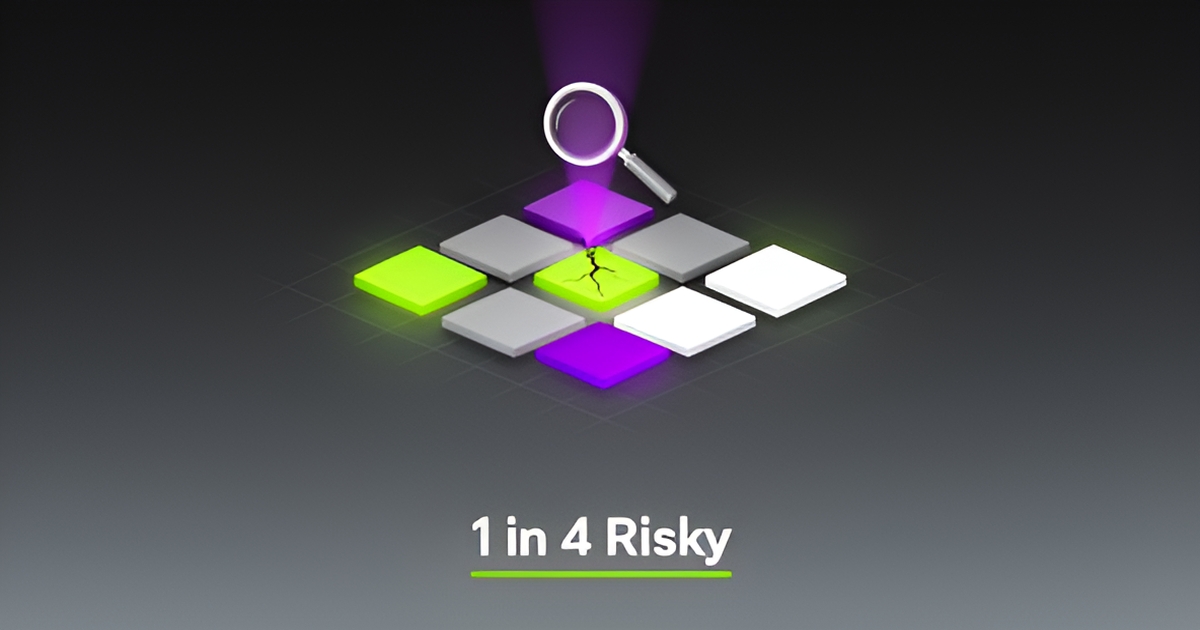
TL;DR: Published research found about 26% of AI agent skills contain at least one vulnerability, and SkillzBench now offers a free way to verify, benchmark, and safely equip skills across Claude Code, Codex, Cursor, and Gemini CLI.
If you've installed an agent skill in the past few months, you've probably done it on faith. Someone published a SKILL.md file on GitHub, it looked useful, you dropped it into Claude Code or Cursor or Gemini CLI, and off it went. You didn't audit the instructions. You didn't check the license. And you almost certainly didn't measure whether the skill actually made your agent better. You're not alone in this, and that's the problem. Published research has found that roughly 26% of agent skills carry at least one vulnerability. A quarter of the ecosystem, in other words, can't be trusted on sight.
What an agent skill actually is
An agent skill is a small instruction package, usually a SKILL.md file, that teaches a coding or chat agent how to handle a specific kind of task. Think of it as a playbook you hand your agent: how to write commit messages a certain way, how to structure a React component, how to run a particular analysis. Skills work across the major agents, including Claude Code, Codex, Cursor, Gemini CLI, and chat-app agents, which is part of why they've spread so quickly. They're cheap to write, easy to share, and genuinely useful when they're good. But 'good' is doing a lot of work in that sentence. A skill is just text your agent will follow. If that text contains a prompt injection, a risky instruction, or a license term you didn't agree to, you've handed a stranger partial control of your workflow.
Why the trust gap exists
The ecosystem grew faster than the quality control around it. Skills get shared on GitHub, discovered through word of mouth, and judged mainly by star counts and README files. None of that tells you whether a skill is safe, whether it's maintained, or whether it actually improves agent performance on real tasks. The research finding that about 26% of skills carry at least one vulnerability should change how you evaluate them. If you've installed a handful of skills, statistically at least one of them is probably risky. And even the safe ones might be useless. A skill that sounds impressive in its description can produce no measurable improvement at all once you test it against the same task without the skill loaded.
How SkillzBench measures what a skill really does
SkillzBench, a free and independent directory run by AIQ Labs, treats this as a measurement problem rather than a curation problem. The platform continuously crawls and deduplicates skills from GitHub, then verifies each one: every version gets pinned to a commit SHA, validated, license-checked, security-scanned, and quality-judged. Then comes the part that matters most. SkillzBench benchmarks every skill in a sandbox using the same model, running tasks with the skill and without it, and publishes the difference as a Lift figure in percentage points. That's the honest answer to the question you should be asking before installing anything: does this skill actually help, and by how much? Crucially, Lift is always shown separately from ratings. A skill can be well-built and still add nothing. A skill can be scruffy and still deliver a real Lift. Keeping those two signals apart lets you judge both dimensions instead of collapsing them into one score.
The trust score and how money stays out of it
Each skill also gets a 0-100 trust score built from security, quality, license, maintenance, and community signals. That score tells you whether a skill is safe to run and likely to keep working; the Lift tells you whether it's worth running in the first place. One thing worth being blunt about: money never touches scores on SkillzBench. The entire platform is free, including the directory, the benchmarks, and the MCP connector. Revenue comes from advertising shown in and around blog articles, and that ad revenue doesn't influence scores or listings. In a market where paid marketplaces face obvious conflicts of interest when a vendor pays for placement, an ad-supported, free directory can stay independent in a way a storefront can't.
Staying current and controlling what your agent sees
Skills aren't static. Upstream authors push changes, and a skill that was safe last month might not be safe after today's commit. SkillzBench tracks upstream changes, re-scans, re-benchmarks, and sends notifications when something you rely on shifts. On the deployment side, the platform's free MCP server connects any agent to the skills you choose, and per-agent loadouts let you toggle skills and tools individually so each agent only sees what you've picked for it. That last part matters more than it sounds. If your agent has access to every skill you've ever installed, its context fills with instructions you didn't intend for that job, and performance suffers. Loadouts give you a deliberate, per-agent setup instead of an accumulation of everything you've collected.
What to do right now
If you're already using skills, the practical first step is an audit: list what you've installed and check each one against a verified, benchmarked source. You can browse the directory and see current trust scores and Lift results at skillzbench.com, where hundreds of skills are already scanned, pinned, and tested, and everything is free. If you're new to skills entirely, start the other way around: pick from skills that have already been benchmarked rather than installing blind and hoping. For business owners and managers adopting AI at work, the same logic applies to your team. A skill that a developer installs becomes part of how your company's work gets done. Verification and measurement aren't optional extras there; they're basic hygiene.
Bottom line
The agent-skills ecosystem isn't going to slow down, and honestly, it shouldn't: skills are one of the cheapest ways to make an agent dramatically more useful. But a quarter of them carry vulnerabilities, and even the clean ones vary wildly in whether they actually help. The fix isn't less adoption. It's measurement before installation: verify what a skill is, benchmark what it does, and control what your agent can see. SkillzBench does all of that for free, and you can check current trust scores and Lift results at skillzbench.com.
Key takeaways
- Agent skills (SKILL.md instruction packages) are spreading fast across GitHub, but published research found roughly 26% carry at least one vulnerability.
- Popularity and star counts tell you nothing about whether a skill actually improves your agent's output or is safe to run.
- SkillzBench benchmarks every skill in a sandbox with the same model, with and without the skill, and publishes the Lift in percentage points.
- A 0-100 trust score combines security, quality, license, maintenance, and community signals, and Lift is always shown separately from ratings.
- Everything on SkillzBench is free: the directory, benchmarks, MCP connector, and per-agent loadouts, with revenue coming only from blog advertising.