LinearB's Agentic Studio Signals a New Rule: Agents Need Context, Not Just Instructions
November 3, 2026
LinearB's Agentic Studio launch shows where agent tooling is headed: context delivered over MCP, skills that adapt to risk, and benchmarks that prove what works.
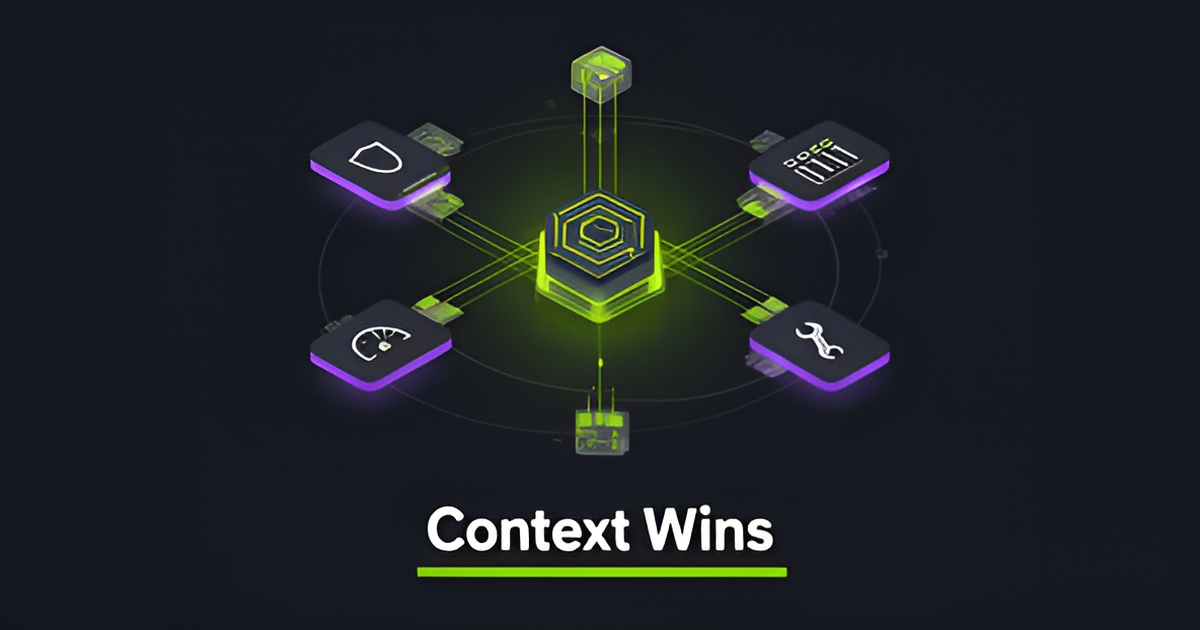
TL;DR: LinearB's new Agentic Studio feeds coding agents real engineering context through MCP and agent skills, and the move confirms what skill builders already know: an agent is only as good as the context and skills you give it.
On November 2, 2026, LinearB, a Gartner Magic Quadrant Leader in developer productivity insight platforms, launched Agentic Studio. The pitch is simple once you strip away the product naming: stop showing engineering leaders charts, and start giving both people and coding agents the specific context they need to act. An AI assistant builds custom metrics from plain-language requests, and coding agents receive an "engineering context layer" delivered through Model Context Protocol (MCP) and agent skills. If you've been watching the agent skills space, none of this will surprise you. It's the clearest sign yet that skills plus MCP is becoming the default way to make agents useful.
From Dashboards to Context
For years, developer productivity platforms were essentially reporting tools. They counted pull requests, cycle times, and review latencies, then handed leaders a dashboard and wished them luck. LinearB's co-founder Ori Keren put the shift bluntly when he said "context is the new king." The company has built a knowledge graph of the software delivery lifecycle: tickets, code changes, releases, incidents, and ownership all linked together, with data normalized across Git and project management systems.
Agentic Studio sits on top of that graph. Leaders can ask questions in plain language about delivery status or AI ROI and get answers plus suggested next steps. Agents get the same context through MCP, so a coding agent understands the codebase, the change it's making, and the risk profile around it before it writes a line of code. Role-based access controls and guardrails round out the enterprise story. The studio is available now to all LinearB customers.
The Effort Skill: Skills That Adapt
The most interesting piece for anyone building with agents is the "LinearB effort skill," currently in early access. It's the first agent skill designed to match a coding agent's effort to the specific task. The skill assesses a change's business relevance, complexity, and risk using signals like code quality, recent incidents, and ownership history. A low-risk typo fix gets less effort and fewer tokens. A complex change touching incident-prone code gets more careful, tested edits.
This is a genuinely different philosophy from the fixed token budgets and one-size-fits-all prompts most teams use today. It also happens to be exactly what the SKILL.md format was built for: packaged instructions that change how an agent behaves based on what it's working on. LinearB built its skill internally and validates it against its own benchmark data. That's the right approach, and it raises an obvious question for the rest of the market: who's validating everyone else's skills?
The Numbers Behind the Launch
LinearB timed the launch alongside its 2026 Software Engineering Benchmarks Report and AI benchmarks, drawn from 2.7 million pull requests across more than 250 organizations. Two findings stand out.
First, heavy AI users merge nearly double the pull requests of their peers, but AI-assisted pull requests are significantly larger, roughly 2.6 times the size of unassisted ones. Second, agent-created pull requests wait more than five times longer for review than unassisted PRs. In other words, AI accelerated the writing side of software delivery and simultaneously created a bottleneck on the review side.
The Kraken case study shows what happens when you attack that bottleneck with data instead of guesswork. Kraken used LinearB's MCP server with AI to find that its review delays were structural, caused by time zones and reviewer availability rather than change size. Acting on that finding cut review time at the 90th percentile by more than half within four months. Evidence beat anecdote, which is the whole argument for benchmarking in the first place.
Why This Matters for Agent Skills Generally
Here's the broader takeaway. When a major platform decides that the way to make coding agents smarter is MCP plus skills, that's validation for the entire skills ecosystem. Claude Code, Codex, Cursor, and Gemini CLI users are already living in this world, and chat-app agents are catching up.
But there's a catch the industry doesn't talk about enough. The open market of skills is largely unverified, and published research found that roughly 26% of skills carry at least one vulnerability. LinearB can afford to build and vet its own skills internally. Most teams can't. If you're pulling skills from GitHub, you're trusting strangers with instructions your agent will follow, sometimes with access to your tools and data.
That's the gap SkillzBench was built to close. SkillzBench continuously crawls and dedupes skills from GitHub, pins every version to a commit SHA, and runs license checks, security scans, and quality judgments on each one. Every skill gets a trust score from 0 to 100 based on security, quality, license, maintenance, and community signals. Then it goes further: each skill is benchmarked in a sandbox with the same model, with and without the skill, and the resulting Lift is published in percentage points. You can see for yourself whether a skill actually helps your agent before you deploy it, and current numbers and verified results are always available at skillzbench.com.
Equipping Agents Without Losing Control
The other lesson worth borrowing from LinearB's design is restraint. Agentic Studio doesn't dump every data point on every agent; it delivers curated context with guardrails. You should treat your own agents the same way.
SkillzBench's free MCP connector works on this principle. You pick the skills you want, toggle skills and tools per agent, and the agent only sees what you chose. When upstream skill repositories change, SkillzBench re-scans and re-benchmarks, then notifies you, so a skill that was safe last month doesn't quietly become a liability this month. Everything on the platform, the directory, the benchmarks, the connector, and the alerts, is free.
What to Watch Next
Expect two things over the next year. More platforms will ship their own agent skills the way LinearB did, because skills are the cheapest way to encode domain expertise for agents. And the review bottleneck will get attacked directly, with skills for automated review comments, risk-based routing, and intelligent merge checks.
If you're an engineering leader, the LinearB benchmarks are worth reading for the AI ROI conversation alone; boards and CFOs are asking whether AI spend is paying off, and PR size and review wait times are the honest starting points. If you're a builder, the move is simpler: the context-plus-skills pattern works, and you can adopt it today without waiting for a vendor. Browse the free, verified skills on SkillzBench, test them against your own workflows, and connect them to your agent with the free MCP server. Measure the Lift yourself. That's the same discipline LinearB is selling, and you can apply it now.
Bottom line
Agentic Studio marks the moment developer productivity platforms stopped observing AI work and started orchestrating it. The interesting part isn't LinearB's specific feature set; it's the pattern underneath: a knowledge graph for context, MCP for delivery, and skills as the behavioral layer. That pattern is available to anyone. The difference between a team that gets real gains from coding agents and one that just generates bigger, slower-reviewed pull requests will come down to which skills they equip and whether those skills are verified, benchmarked, and current. The tools to do exactly that are free and live today.
Key takeaways
- LinearB launched Agentic Studio on November 2, 2026, shifting developer productivity tools from dashboards to actionable context for both humans and coding agents.
- Its 'effort skill,' now in early access, matches a coding agent's effort to task risk and complexity instead of arbitrary limits.
- LinearB's 2026 benchmarks show AI-assisted pull requests are larger and wait over five times longer for review, exposing new bottlenecks.
- Kraken used LinearB's MCP server to cut 90th-percentile review time by more than half in four months.
- The launch validates MCP and agent skills as standard infrastructure, and independent verification matters: published research found roughly 26% of skills carry at least one vulnerability.