IBM's New Agent Governance Tools Solve Half the Problem. The Other Half Lives in the Skills Your Agents Use.
October 28, 2026
IBM just gave AI agents governed identities and revocable credentials. It's the right foundation, but it doesn't verify what your agents have been taught. The other half of agent governance happens at the skill level.
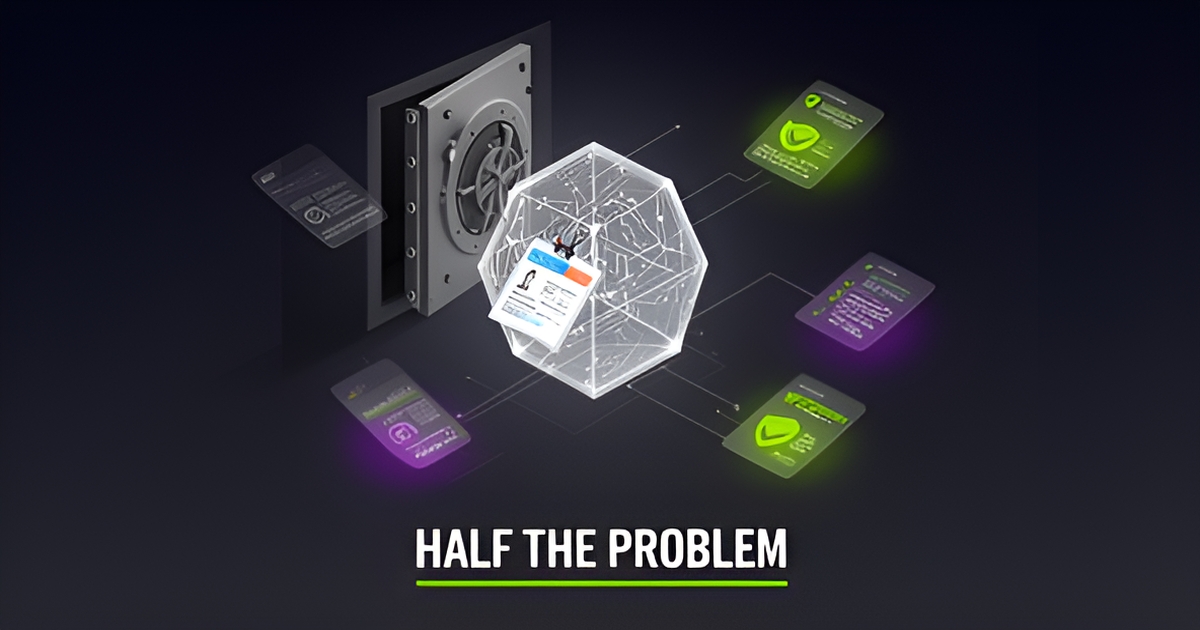
TL;DR: IBM's TechXchange announcements give AI agents identities, least-privilege credentials, and cross-platform visibility, but identity controls can't tell you whether the skills an agent uses are safe or actually useful, which is where capability-level verification comes in.
At IBM TechXchange 2026 in Atlanta this week, IBM made a confession the industry has been circling for a while: enterprises are deploying AI agents faster than they can verify them. The company's answer, announced October 27, is a governance layer built around identity. Each agent gets a governed identity through HashiCorp Vault Agent Identity, with a record of who owns it, where it sits in its lifecycle, and what authority it's been granted. Credentials become short-lived and least-privilege, rotated automatically and revoked in real time if an agent steps out of line. And watsonx Orchestrate now unifies discovery, containment, and evaluation across Amazon Bedrock, Microsoft Foundry, and Google Gemini. It's a serious piece of work, and it addresses a genuine gap. But it covers only one half of the governance problem. The other half, the half IBM's announcement doesn't touch, is what your agents actually know.
The Numbers Behind the Announcement
The framing statistics in IBM's release come from Gartner, and they're worth sitting with. By 2028, the average Fortune 500 enterprise is projected to run more than 150,000 AI agents. Meanwhile, only 13% of organizations believe they have adequate AI agent governance in place. That gap, between the scale of deployment and the maturity of oversight, is the whole story. Dinesh Nirmal, SVP of IBM Software, put it plainly in the release: enterprises win by changing how the business runs, and agents need an operating model with the same discipline applied to any other critical system. IBM is backing that with track record, too. HashiCorp Vault already secures non-human identities for ABN AMRO, Adobe, BBVA, BlackRock, Canva, Expedia, Starbucks, and Target, among others. The 2025 acquisition of HashiCorp made this announcement almost inevitable, and it's the first high-profile integration of the Vault franchise into IBM's AI strategy. If you're a manager adopting AI at work, the message from one of the world's largest software vendors is clear: agent governance is now table stakes, and the window for treating agents as harmless chatbots has closed.
What Identity and Credential Controls Actually Do
Strip away the product names and IBM's approach rests on two ideas. First, treat every agent as a new class of non-human identity. When an agent has a governed identity, you can answer basic questions that are currently unanswerable in most organizations: who owns this agent, is it still supposed to be running, and what was it authorized to do? Second, make credentials the security boundary. Long-lived, overprivileged credentials are the biggest risk vector in agent deployments, because a leaked API key attached to an overprivileged agent can quietly do damage for months. IBM's answer is short-lived, scoped credentials with automated rotation and real-time revocation. If an agent attempts something unauthorized, its access dies on the spot. There's also a visibility layer: watsonx Orchestrate is positioned as a vendor-neutral control plane, discovering and evaluating agents whether they run on Bedrock, Foundry, or Gemini. That multi-platform framing matters, because large enterprises almost never standardize on one AI stack. You can't govern what you can't see, and you can't see what's scattered across three clouds.
The Half IBM Didn't Cover: What the Agent Knows
Here's the problem with stopping at identity and access. An agent can have a perfect Vault identity, immaculate least-privilege credentials, and full lifecycle tracking, and still be handed a vulnerable or useless skill. Agent skills, the SKILL.md instruction packages that tell coding agents and chat agents how to accomplish tasks, are proliferating across GitHub at a pace that outstrips any review process. Published research has found that roughly 26% of skills carry at least one vulnerability. Identity controls don't read those packages. Credential rotation doesn't check whether a skill quietly instructs an agent to exfiltrate data, or whether it just doesn't work. This is the capability half of governance, and it's the half that most organizations haven't even started on. Think of it this way: IBM governs who the agent is and what it can reach. Nobody in that stack governs what the agent has been taught. It's the equivalent of running thorough background checks on every employee and then handing them a training manual you found on the internet without opening it.
Least Privilege for Capabilities, Not Just Credentials
IBM's least-privilege credential model is worth extending, because the same principle applies to skills and tools. An agent that can see fifty skills when its job needs three is an agent with an oversized attack surface and a bloated context window. Per-agent loadouts solve this: you toggle on only the skills and tools a specific agent needs, and the agent sees nothing else. SkillzBench, the free independent directory run by AIQ Labs, builds this pattern directly into its free MCP connector. You pick verified skills for an agent, the agent sees only what you chose, and everything stays scoped. The directory side handles the verification work that makes scoping trustworthy. Every skill in the directory is pinned to a specific commit SHA, so you always know exactly which version you tested. Each one gets a license check, a security scan, and a quality review, rolled into a trust score from 0 to 100. And because a skill being safe doesn't mean it's useful, SkillzBench benchmarks every skill in a sandbox with the same model, running the task with and without the skill, and publishes the resulting Lift in percentage points. Ratings and measured performance stay separate, and money never touches either. Everything, the directory, the benchmarks, the MCP connector, and the alerts, is free.
A Practical Checklist for the 87%
If you're in the 87% of organizations that don't feel confident about agent governance, here's a workable starting point, assembled from both halves of the stack. Identity: give every agent a governed identity with a named owner and a lifecycle record. This is the IBM-style foundation, and it's non-negotiable. Access: replace long-lived credentials with short-lived, scoped ones, and make sure you can revoke an agent's access in real time. Capability: verify every skill before you hand it to an agent. Check that it's pinned to a commit, license-checked, and security-scanned, and check the measured Lift so you know it actually helps rather than just existing. Scope: give each agent a loadout containing only the skills and tools its job requires. Currency: track upstream changes on the skills you use, because a skill that was clean last month may not be clean today. SkillzBench handles the last three steps for free, including re-scanning and re-benchmarking when upstream skills change, with alerts when something you depend on moves. For current numbers on skills scanned and benchmark results, skillzbench.com publishes everything live.
Bottom line
IBM's announcement is a genuine step forward for agent governance, and the Gartner figures it cites should worry anyone responsible for an AI deployment. Identity, credentials, and cross-platform visibility are the right foundation. But governance doesn't end at the boundary of what an agent can access. The next question, and the one that will decide whether your 150,000 agents help or hurt you, is what you've taught them. Verify the skills, scope the loadouts, and measure whether each skill actually earns its place. The identity layer is being built by the big vendors. The capability layer is yours to handle, and free tools exist to handle it with. Before you give an agent the keys, check its toolbox.
Key takeaways
- IBM announced governed identities for AI agents, short-lived least-privilege credentials via HashiCorp Vault, and watsonx Orchestrate for cross-platform agent discovery and evaluation.
- IBM's release cites Gartner projections that a Fortune 500 enterprise will run over 150,000 AI agents by 2028, while only 13% of organizations feel confident in their agent governance.
- Identity and credential controls govern who an agent is and what it can access, but they don't verify what the agent knows: the skills and instruction packages it actually runs on.
- Published research has found roughly 26% of agent skills carry at least one vulnerability, so skill-level scanning and benchmarking fill a real gap in the governance stack.
- Free options exist for the capability half: SkillzBench security-scans, version-pins, and benchmarks agent skills, and its per-agent loadouts apply least privilege to tools and skills.